Why These b2b saas Marketing Strategies Matter in 2025
Competition is at an all-time high and buyer expectations have never been more demanding. Generic outreach and one-size-fits-all campaigns deliver dwindling returns. This listicle equips B2B SaaS marketers with 10 proven strategies to generate leads, boost retention, and scale revenue in 2025.
What you will learn:
- Account-Based Marketing (ABM) workflows that turn high-value targets into customers
- Content Marketing & Thought Leadership tactics that build trust with decision makers
- Inbound Marketing & Lead Nurturing playbooks to guide prospects through your funnel
- Product-Led Growth (PLG) methods that spark adoption and drive upsell
- Demand Generation & Paid Advertising frameworks for precise audience reach
- Community Building & Developer Relations tips for Reddit and niche forums
- Partnership & Channel Marketing models to multiply your go-to-market power
- Sales Enablement & Consultative Selling assets that align marketing with revenue
- Events Marketing & Webinars formulas that drive demo requests and SQLs
- Marketing Automation & Personalization recipes for 1:1 engagement at scale
Each section delivers:
- A concise overview of the strategy’s impact on MQLs and SQLs
- Real-world examples from leading SaaS brands
- A step-by-step implementation checklist
- Key metrics to track performance
- Practical tips to sidestep common mistakes
Apply these b2b saas marketing strategies to:
- Accelerate pipeline velocity
- Lower customer acquisition cost
- Strengthen brand authority in niche communities
- Drive sustainable, scalable growth
No filler, just targeted, actionable insights. Let’s dive straight into the top 10 strategies that will set your SaaS company apart in 2025.
1. Account-Based Marketing (ABM)
What is Account-Based Marketing?
Account-Based Marketing is a highly targeted B2B strategy that treats individual accounts as markets of one. Instead of casting a wide net, ABM focuses marketing and sales resources on a curated list of high-value target accounts.
Why Use ABM?
ABM aligns sales and marketing around specific accounts to drive higher ROI and faster deal velocity. By delivering personalized campaigns and experiences, you engage decision-makers with relevant content at every stage.
Real-World Examples
- Terminus uses robust targeting to reach enterprise SaaS buyers.
- 6sense applies predictive analytics to identify high-intent accounts.
- Demandbase pioneered early ABM strategies for Fortune 500 clients.
“ABM shifts your funnel from broad leads to high-quality account engagement”
Actionable Tips
- Identify 10–20 high-value accounts before scaling.
- Build detailed buyer personas for each account based on firmographics.
- Leverage intent data to catch in-market signals.
- Create account-specific content and messaging, such as personalized case studies or demos.
- Use marketing automation tools for dynamic personalization at scale.
- Track engagement metrics—email opens, content downloads, meeting requests—religiously.
When to Implement ABM?
Use ABM when your average deal size justifies a high upfront investment. It works best for complex sales cycles involving multiple stakeholders. For complementary lead generation tactics and deeper ABM insights, check out Learn more about Account-Based Marketing (ABM) on pimpmysaas.com.
2. Content Marketing & Thought Leadership
What is Content Marketing & Thought Leadership?
Content marketing for B2B SaaS involves creating valuable, educational content that addresses audience pain points and challenges. Thought leadership positions companies as industry experts by sharing unique insights and opinions.
Why Use Content Marketing & Thought Leadership?
This strategy builds trust and credibility throughout the buyer journey by offering actionable guidance. It drives organic traffic, captures leads with high intent and nurtures prospects across multiple touch points. It also supports other b2b saas marketing strategies by feeding email campaigns and marketing automation workflows.
Real-World Examples
- HubSpot maintains a massive library of blogs, guides and a learning academy.
- Slack features executive thought leadership from Stewart Butterfield on collaboration trends.
- Notion leverages a community-driven content model for product tutorials and templates.
- Drift publishes conversational marketing content, including podcasts and research reports.
“Creating valuable content is the cornerstone of effective b2b saas marketing strategies”
Actionable Tips
- Focus on buyer intent keywords to target high-value search queries.
- Develop comprehensive pillar content with supporting cluster articles.
- Update and repurpose existing top-performing resources quarterly.
- Feature founder and executive voices for authentic thought leadership.
- Plan a content calendar aligned with each buyer journey stage.
- Measure performance via engagement metrics, conversions and time on page.
- Distribute content across channels: blog, email, social and webinars.
When to Implement Content Marketing & Thought Leadership?
Use this approach when your goal is to establish authority and attract optimized organic traffic. It works well for mid to late funnel nurturing and aligns with long-term SEO within your b2b saas marketing strategies. This method scales well when you have dedicated resources for content creation and distribution. For deeper insights, Learn more about Content Marketing & Thought Leadership on pimpmysaas.com.
3. Inbound Marketing & Lead Nurturing
What is Inbound Marketing & Lead Nurturing?
Inbound marketing attracts customers through valuable content and experiences rather than interruptive advertising. By offering educational resources such as blog posts, ebooks, and webinars, it draws prospects toward your brand. Lead nurturing then guides these engaged visitors with targeted messaging based on their position in the buyer journey.
Why Use Inbound Marketing & Lead Nurturing?
This approach builds trust and positions your SaaS as a helpful authority. It generates a steady flow of qualified leads and improves conversion rates by addressing pain points at each stage. Nurtured leads also tend to have higher lifetime values and shorter sales cycles.
Real-World Examples
- HubSpot pioneered the inbound methodology with comprehensive content hubs.
- Marketo uses advanced lead scoring to prioritize high-intent prospects.
- Pardot (Salesforce) integrates CRM data for seamless nurturing workflows.
- ActiveCampaign delivers dynamic email series for mid-market SaaS.
“Inbound marketing focuses on helping prospects solve problems rather than pushing products”
Actionable Tips
- Create targeted lead magnets for each buyer persona
- Build lead scoring models based on engagement and demographic data
- Develop stage-specific email sequences for awareness, consideration, decision
- Use dynamic content based on real-time prospect behavior
- Implement A/B testing on email subject lines and copy
- Align sales and marketing on clear lead readiness criteria
- Monitor key email metrics: open rate, click rate, unsubscribe rate
When to Implement Inbound Marketing & Lead Nurturing?
Adopt this strategy when you need to fill your funnel with educated, qualified leads and shorten long sales cycles. It works best for complex B2B SaaS offerings that require trust before purchase. For deeper tactics on generating leads for email marketing and nurturing sequences, learn more about Inbound Marketing & Lead Nurturing on pimpmysaas.com.
4. Product-Led Growth (PLG)
What is Product-Led Growth?
Product-Led Growth is a strategy where the product itself drives acquisition, retention, and expansion. Within the landscape of b2b saas marketing strategies, PLG emphasizes free trials, freemium models, and self-service onboarding to show value quickly.
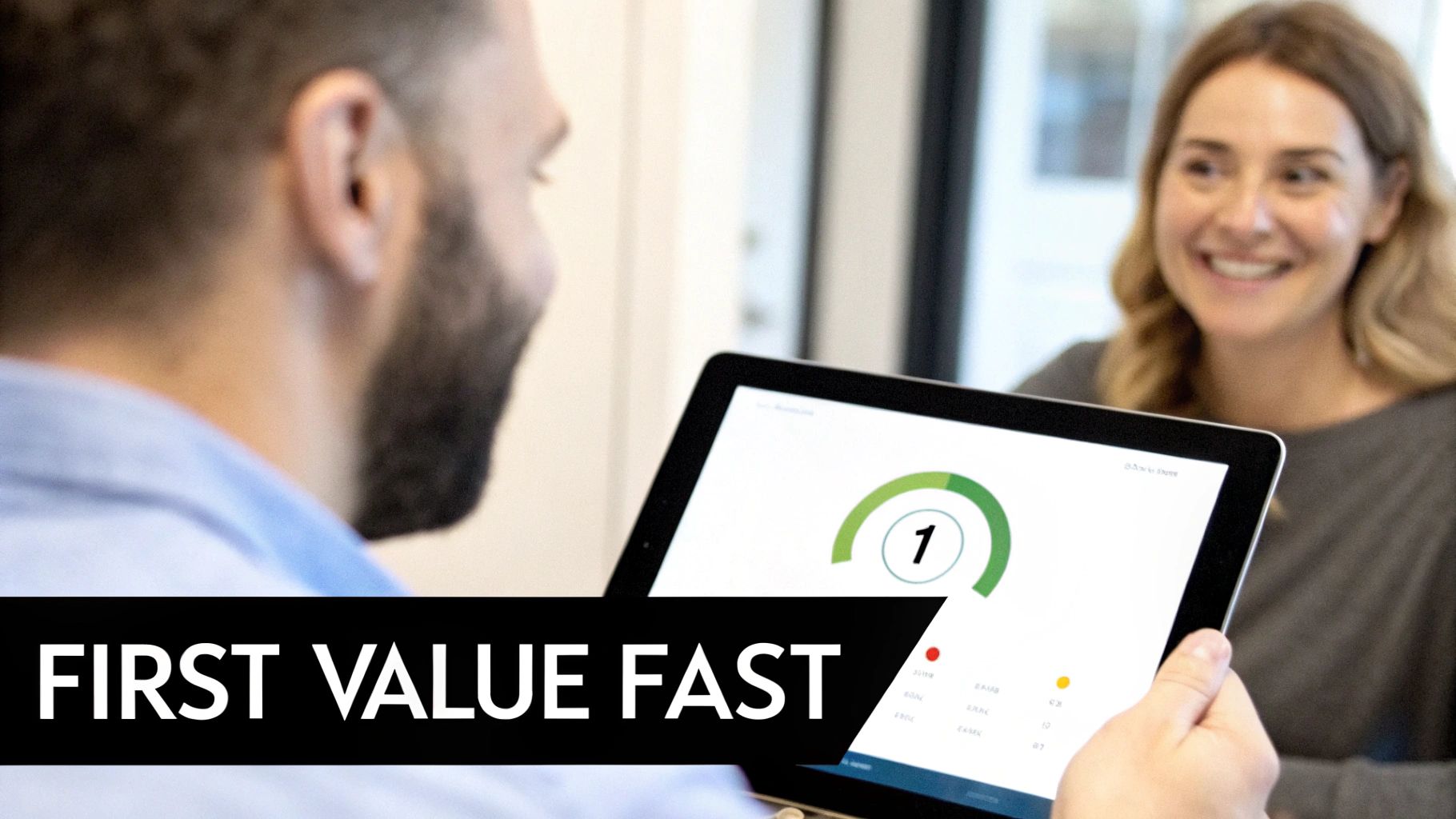
PLG reduces sales friction by letting users experience core features first-hand. This accelerates time-to-value and encourages viral referral loops.
Why Use PLG?
PLG aligns marketing, product, and customer success around user experience. This method lowers customer acquisition cost and boosts lifetime value by converting active users into paying customers through in-app triggers and usage-based upsells.
Real-World Examples
- Slack used viral team invites to spark network effects
- Figma leveraged a freemium tier to drive collaborative design adoption
- Notion built a massive user base with a robust free tier
- Canva’s simple onboarding produced high invite rates
- Zapier converted hobbyists on a free plan into premium subscribers
“Let the product sell itself by driving value in minutes”
Actionable Tips
- Design frictionless onboarding with first key action in under 5 minutes
- Implement in-app analytics to track activation and retention
- Create clear upgrade paths with tiered pricing and feature gates
- Use in-app messaging to educate users on high-value features
- Build community forums and encourage user-generated content
- Optimize the free-to-paid funnel by testing CTAs and trial lengths
When to Implement PLG?
Adopt PLG when your product delivers immediate user value and can onboard new accounts without heavy handholding. It works best for SaaS solutions with viral use cases and scalable self-service flows.
5. Demand Generation & Paid Advertising
What is Demand Generation & Paid Advertising?
Demand generation is a targeted approach to creating awareness and interest in your SaaS solution through paid channels. This strategy combines paid ads (PPC, display, social) with dedicated landing pages, gated content, and nurture campaigns to drive qualified leads. Unlike broad brand awareness, demand generation focuses on intent-based targeting to reach prospects actively researching solutions.
Why Use Demand Generation & Paid Advertising?
- Delivers predictable lead volume by bidding on high-intent keywords and audiences
- Accelerates pipeline growth with measurable ROI and clear cost per acquisition
- Aligns ad spend with buyer journey stages for more efficient budgets
- Complements organic channels, amplifying top-performing content and offers
Real-World Examples
- Salesforce uses heavy LinkedIn and Google search ads to capture enterprise interest
- Datadog runs aggressive multi-channel demand gen across display, social, and video
- Okta focuses on SEM and programmatic display to drive trial sign-ups
- Twilio targets developers with tailored demand campaigns and GitHub ads
“Pairing demand generation with paid ads unlocks high-intent audiences and scales lead velocity”
Actionable Tips
- Build persona-specific landing pages for each ad campaign to improve relevance
- Test different ad creatives, headlines, and messaging in rotating ad sets
- Use audience segmentation and lookalike models in LinkedIn and Facebook
- Implement conversion tracking and UTM parameters on every ad link
- Set up retargeting sequences to re-engage site visitors who drop off
- A/B test CTAs, images, and copy to identify top performers
- Monitor key KPIs like cost per lead (CPL) and cost per acquisition (CPA)
- Deploy sequential messaging across display, email, and social touchpoints
When to Implement Demand Generation & Paid Advertising?
Use this approach when you need a scalable, predictable stream of mid- to late-funnel leads. It works best for B2B SaaS products with defined buyer personas and established content. For more on tuning your paid strategy, check out Google Ads or LinkedIn Marketing Solutions.
6. Community Building & Developer Relations
What is Community Building & Developer Relations?
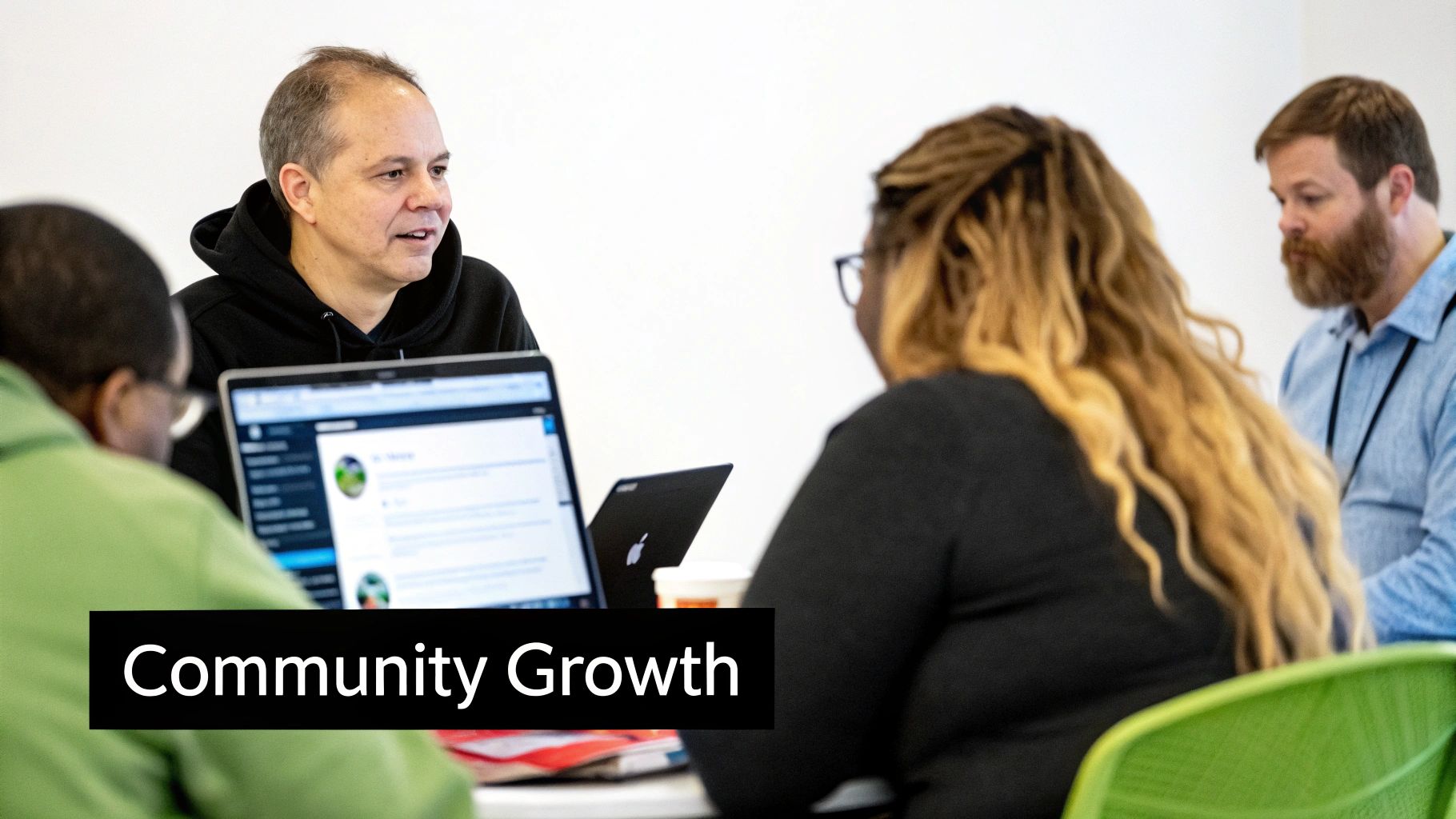
Community Building & Developer Relations is a strategic approach that leverages user groups, developer advocates, and brand ambassadors to drive organic growth. By nurturing forums, Slack or Discord channels, and meetups, B2B SaaS companies foster loyalty, gather product feedback, and reduce support load. This method is one of the most effective b2b saas marketing strategies for creating long-term advocates.
Why Use Community Building & Developer Relations?
- Builds authentic engagement and trust around your product.
- Generates valuable user feedback to inform development.
- Creates a network of ambassadors who evangelize your platform.
Real-World Examples
- Stripe hosts hackathons and local developer meetups.
- Shopify powers a global merchant community and partner ecosystem.
- Twilio maintains Slack workspaces and online events for developers.
- MongoDB runs an active user group with regular conferences.
- Kubernetes thrives on its open source community contributions.
“A vibrant community is your best growth engine outside paid channels”
Actionable Tips
- Start small by inviting your most engaged customers.
- Create multiple channels: Slack, Discord, forums, or subreddits.
- Host regular virtual and in-person events like meetups or webinars.
- Empower community leaders and active moderators.
- Recognize top contributors with badges, swag, or spotlight features.
- Share early access or beta features exclusively with community members.
- Use polls and feedback threads to shape your product roadmap.
- Facilitate peer-to-peer connections through mentorship programs.
When to Implement Community Building & Developer Relations?
Use this approach when you have a core user base eager to collaborate and share. It works best for developer-centric platforms or niche SaaS tools with multi-stakeholder sales cycles. Community-driven growth not only amplifies word of mouth but also supports scalable user onboarding without heavy support investment. For deeper dives into community tactics, check out Learn more about community-driven growth on pimpmysaas.com.
7. Partnership & Channel Marketing
What is Partnership & Channel Marketing?
Partnership & Channel Marketing leverages relationships with complementary SaaS vendors, resellers, and service providers to co-market, co-sell, and integrate solutions. By aligning with companies that share your target audience, you tap into established customer bases and expand reach without starting from scratch.
Why Use Partnership & Channel Marketing?
As one of the most effective b2b saas marketing strategies, partnerships deliver high-quality leads at lower acquisition costs. You gain credibility through endorsed referrals and boost product value with integrations. This approach scales faster than solo efforts and strengthens your go-to-market motion by pooling resources and expertise.
Real-World Examples
- Salesforce builds its AppExchange partner ecosystem to cross-sell thousands of add-ons.
- Slack maintains deep integrations with over 2,000 apps, driving stickiness.
- HubSpot operates a partner marketplace and co-marketing programs to fuel referrals.
- Shopify powers a massive app partner network to extend functionality and drive merchant growth.
“Partner channels can become your most scalable growth engine when aligned strategically”
Actionable Tips
- Identify 5–10 partners with complementary products and overlapping audiences
- Build a partner enablement portal with sales decks, demo scripts, and playbooks
- Develop clear co-marketing guidelines, joint webinars, and email templates
- Publish easy-to-follow API docs and SDKs for seamless integration
- Establish fair revenue sharing models that reward both parties
- Track partner-sourced leads and ROI in your CRM
- Host quarterly training sessions and strategy check-ins
- Create tiered partnership levels based on commitment and performance
When to Implement Partnership & Channel Marketing?
Use this strategy when your solution benefits from integrations and you have dedicated resources to manage alliances. It works best once you’ve nailed product-market fit and want to accelerate growth by leveraging existing networks. For advanced tactics, explore additional b2b saas marketing strategies to complement your channel efforts.
8. Sales Enablement & Consultative Selling
What is Sales Enablement & Consultative Selling?
Sales enablement is a strategic approach that equips sales teams with tools, content, and training needed to sell more effectively. Consultative selling emphasizes understanding customer needs and positioning solutions as partnerships. Together, they ensure reps deliver the right message at the right time.
Why Use Sales Enablement & Consultative Selling?
Sales enablement ensures reps have the right tools and messaging to engage buyers effectively. It boosts conversion rates by aligning marketing content to sales stages. Consultative selling cultivates trust, uncovers deeper customer needs, and positions your product as a strategic partnership.
Real-World Examples
- Salesforce uses Sales Cloud to deliver playbooks, scripts, and ROI calculators.
- Seismic (https://seismic.com) centralizes collateral, battle cards, and insights.
- Showpad streamlines content management for sales teams, tracking asset performance.
- Highspot integrates coaching, content usage metrics, and engagement insights.
“Effective sales enablement turns content into closed deals by empowering reps with the right insights at every stage.”
Actionable Tips
- Involve sales reps early when creating collateral to capture real objections.
- Build role-specific assets for AEs, SDRs, and customer success teams.
- Create battle cards for top competitor scenarios, update them quarterly.
- Develop ROI calculators tailored to different verticals, revising pricing assumptions regularly.
- Launch ongoing coaching sessions that reinforce consultative techniques.
- Use your CRM to track content usage and measure engagement impact.
- Set up regular feedback loops so reps can request new assets and report gaps.
- Monitor sales productivity metrics - win rates, cycle times, and content-to-deal correlation.
When to Implement Sales Enablement & Consultative Selling?
Use this approach when your sales cycle involves multiple stakeholders and complex solutions. If marketing produces collateral but closed rates lag, invest in enablement. It supports other b2b saas marketing strategies by aligning messaging, accelerating the sales funnel, and driving higher ROI.
9. Events Marketing & Webinars
What is Events Marketing & Webinars?
Events Marketing & Webinars combines virtual and in-person experiences to build brand awareness, generate leads, and deepen customer relationships. For B2B SaaS marketing strategies, this covers webinars, virtual summits, user conferences, trade shows, and industry meetups.
Why Use Events Marketing & Webinars?
High-touch touchpoints drive meaningful connections with prospects and customers. Events offer live interaction, trust building, and rich content that can be repurposed across channels.
Real-World Examples
- HubSpot hosts Inbound, the largest marketing event worldwide.
- Salesforce runs Dreamforce, a mega conference for professionals.
- MongoDB organizes MongoDB.local, a city-tour series.
- Slack presents Workspace Summit to showcase product updates.
- Datadog holds an annual customer user conference.
“In-person and virtual events turn passive audiences into active advocates”
Actionable Tips
- Select events based on attendee quality, not sheer volume.
- Secure speaking slots on panels or keynotes to enhance credibility.
- Develop strategic sponsorships at industry-leading conferences.
- Launch pre-event email and social campaigns to boost registrations.
- Equip your sales team with event talking points and demo scripts.
- Capture attendee data onsite or via webinar platforms, then follow up within 24 hours.
- Repurpose recorded sessions into blog posts, social snippets, and email courses.
- Measure event ROI by tracking leads, pipeline value, and deal velocity.
- For webinars, monitor registrations, live attendance, poll responses, and Q&A engagement.
When to Implement Events Marketing & Webinars?
Implement this approach when you need to showcase product depth, engage multiple stakeholders, or launch major features. It works best for customer retention campaigns, high-touch lead generation, and elevating your B2B SaaS brand presence.
10. Marketing Automation & Personalization
What is Marketing Automation & Personalization?
Marketing automation uses technology to automate repetitive marketing tasks, scale personalization, and improve efficiency. Modern platforms enable behavioral triggers, dynamic content, lead scoring, and multi-channel orchestration. Combined with first-party data, these tools deliver hyper-personalized experiences at scale.
Why Use Marketing Automation & Personalization?
Automating workflows frees marketers to focus on strategy and creative assets. Personalization boosts engagement by delivering the right message to the right audience at the right time. Together, they increase conversion rates, shorten sales cycles, and improve customer journeys.
Real-World Examples
- HubSpot – User-friendly platform with strong sequence and workflow capabilities.
- Marketo – Enterprise-grade automation supporting complex multi-step campaigns.
- Pardot – Salesforce’s native solution for seamless CRM integration.
- ActiveCampaign – Mid-market focus with built-in email, SMS, and site tracking.
- Klaviyo – E-commerce specialist offering rich segmentation and dynamic content.
“Marketing automation turns data into timely, personalized experiences that drive revenue.”
Actionable Tips
- Start with core workflows before building complexity.
- Clean and organize data to ensure accurate segmentation.
- Use behavioral triggers for highly relevant messaging.
- Create segment-specific workflows based on company size, industry, or role.
- Implement lead scoring that weights engagement, firmographics, and intent.
- Continuously test and optimize email sequences and landing pages.
- Use dynamic content blocks keyed to account or user attributes.
- Monitor metrics such as open rates, click-throughs, and conversion velocity.
- Integrate your CRM with marketing automation for full visibility into performance.
When to Implement Marketing Automation & Personalization?
Adopt this approach when you need to nurture leads across long sales cycles or manage high volumes of outreach. It works best once you have defined buyer personas, a CRM in place, and clean data sources. For B2B SaaS companies aiming to scale campaigns without sacrificing personalization, marketing automation is essential.
B2B SaaS Marketing Strategies: 10-Point Comparison
Next Steps to Mastering b2b saas Marketing Strategies
Recap of Essential Insights
You have explored ten powerful b2b saas marketing strategies that drive growth across the funnel. Each tactic delivers unique value when executed with precision and backed by data.
- Account-Based Marketing (ABM) enables hyper-targeted campaigns personalized for high-value prospects.
- Content Marketing and Thought Leadership build authority and drive organic SEO momentum.
- Inbound Marketing and Lead Nurturing foster trust with staged workflows and relevant touchpoints.
- Product-Led Growth (PLG) accelerates adoption through trial experiences and in-app onboarding.
- Demand Generation and Paid Advertising capture intent with tightly segmented ads and offers.
- Community Building and Developer Relations leverage Reddit and forums for genuine engagement.
- Partnership and Channel Marketing unlocks new audiences through complementary alliances.
- Sales Enablement and Consultative Selling arm reps with content, demos, and objection playbooks.
- Events Marketing and Webinars create interactive forums that showcase expertise and collect high-value leads.
- Marketing Automation and Personalization tailor messages at scale for deeper customer connections.
Data-driven iterations supercharge ROI across every stage of your campaign
Actionable Roadmap
Turn insights into impact with this step-by-step implementation guide:
- List active channels, content assets, ad spend, and conversion rates.
- Tie each b2b saas marketing strategy to measurable goals and timelines.
- Rank tactics by potential ROI, required budget, and team bandwidth.
- Map content, paid ads, community posts, and webinars across months.
- Test one paid ad group, one ABM play, and one PLG experiment.
- Monitor MQLs, SQLs, cost per acquisition, and engagement rates.
- Double down on top performers and iterate weaker programs with A/B tests.
- Monitor MQL-to-SQL Conversion Rates for each channel to spot bottlenecks.
- Use Cohort Analysis to evaluate retention and expansion after trial starts.
- Employ UTM Parameters and attribution models to calculate channel-level ROI.
- Analyze Reddit sentiment and forum engagement spikes around your content.
- Track webinar attendance trends and drop-off points to optimize scheduling.
Measuring Success and Scaling
Tracking the right metrics ensures continual growth and refinement.
Embrace Continuous Improvement
Mastering b2b saas marketing strategies requires an agile mindset. Schedule fortnightly review sessions to share data insights, swap creative ideas, and adjust budgets. Foster a culture where every team member feels empowered to propose optimizations. Small, consistent adjustments compound into breakthrough performance.
Every step you take strengthens your brand’s presence, fuels demand generation, and fosters lasting customer relationships. By applying these tactics systematically, you unlock sustainable growth and position your SaaS for market leadership.
Keep iterating, stay curious, and let data be your guide. The future belongs to marketers who blend creativity with analytics to deliver exceptional value.
Ready to supercharge your Reddit strategy, boost SEO visibility, and accelerate ROI? Partner with PimpMySaaS for expert support. Discover custom solutions at PimpMySaaS and transform your b2b saas marketing strategies today.